Marketing-Intelligence

Marketing Intelligence: The New Engine of Business Growth

Marketing today is far more than producing attractive campaigns or posting creatively on social media. Modern businesses operate in an environment where customers are constantly connected, information travels instantly, Marketing Intelligence: The New Engine of Business Growth, and competitors are only a click away. In such a landscape, the companies that succeed are those that do not rely on guesswork. They learn continuously from data, understand changing behavior patterns, and make decisions grounded in evidence. This disciplined approach is known as marketing intelligence, and it has become one of the most important foundations for growth in the digital age.

What Is Marketing Intelligence?

Marketing intelligence refers to the tools, processes, and insights used to monitor the market environment and turn information into an actionable strategy. It includes:

  • customer behavior and preferences
  • competitor performance and positioning
  • product demand and market opportunities
  • pricing trends and revenue patterns
  • campaign performance and attribution data
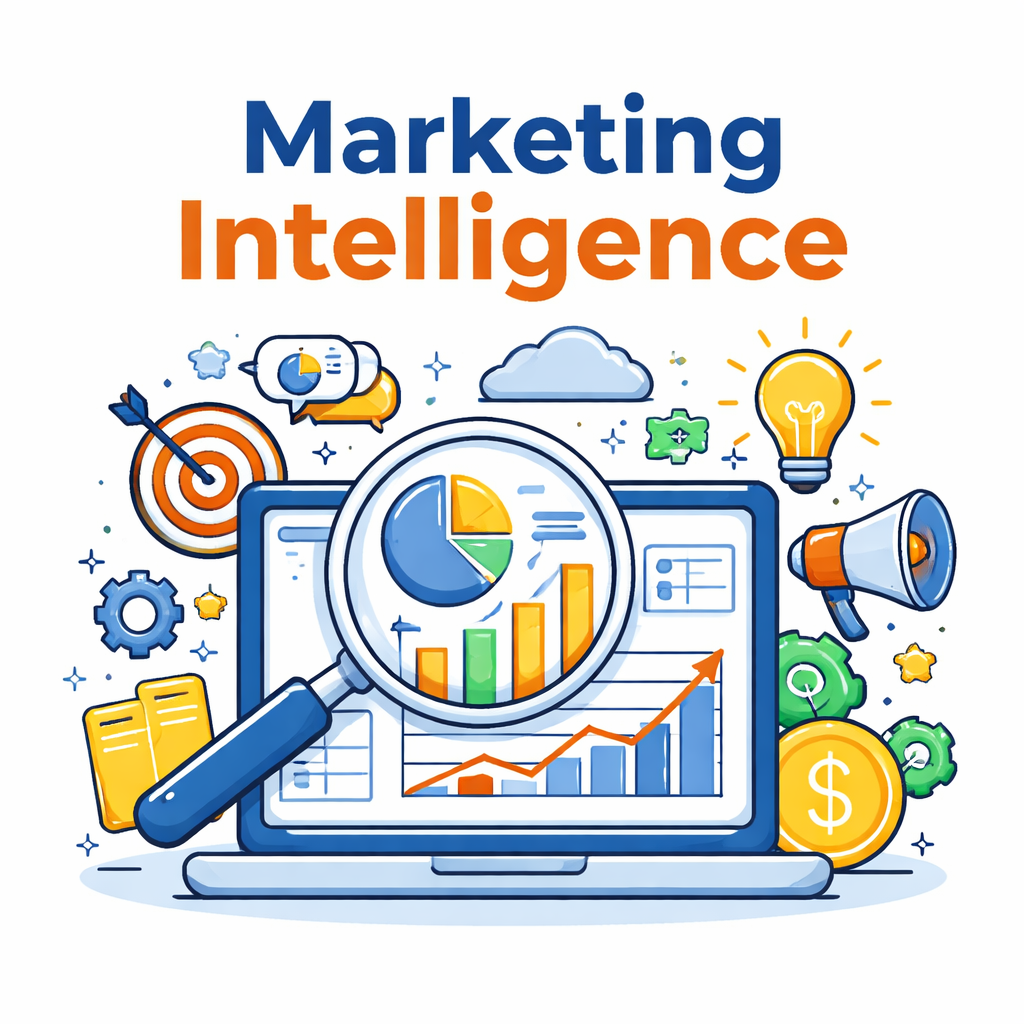
Marketing-Intelligence

Marketing intelligence can be described as the practice of collecting, analyzing, and applying information about markets, customers, competitors, and performance to guide strategy and action. It is not limited to reports or analytics dashboards; instead, it represents a mindset in which every significant marketing decision is informed by insight rather than assumption. When a business uses marketing intelligence effectively, it develops a clearer picture of who its customers are, what they value, how the market around them is evolving, and what actions are likely to create the best outcomes. This clarity allows organizations to move from reactive marketing to a proactive strategy.

At its core, marketing intelligence is about understanding people. Every purchase decision carries emotion, motivation, and context. Data alone is not enough unless it is transformed into insight about human behavior. Companies use sources such as website interactions, purchase histories, search patterns, and direct feedback to learn how their audiences think and act. Over time, these patterns reveal which messages resonate, which products solve real problems, and which experiences cause frustration. Businesses that pay attention to these signals can personalize communication, improve customer experience, and build stronger long-term relationships. Instead of pushing generic advertising, they speak in ways that feel relevant and meaningful.

Marketing intelligence also plays a critical role in understanding competition. No business operates in isolation, and even the most innovative product will face alternatives in the market. Intelligent organizations study how competitors position themselves, how they price, how they communicate, and how customers respond to them. This is not simply imitation; it is learning. By identifying strengths and weaknesses in the competitive landscape, a business can position its own offering more clearly. It may discover an underserved segment, a gap in messaging, or an opportunity to differentiate through quality or service. Competitor awareness strengthens strategic decision-making and prevents companies from being surprised by industry shifts.

Another important dimension of marketing intelligence involves recognizing broader market trends. Technology changes consumer expectations, economic conditions influence purchasing power, and cultural movements reshape priorities. For example, concerns about sustainability, convenience, and personalization have transformed entire industries in recent years. A business that monitors these external signals can adapt its strategy before trends become unavoidable. It might innovate new products, redesign services, or reposition its brand identity. In this sense, marketing intelligence helps organizations not only respond to the present but also prepare for the future.

The rapid rise of artificial intelligence has significantly expanded the capabilities of marketing intelligence. Earlier, data analysis was mostly descriptive: companies looked backward at what had happened. Today, AI enables predictive and even prescriptive insight. Sophisticated algorithms can identify hidden relationships within massive datasets, anticipate behavior patterns, and recommend the next best action. This evolution enables marketers to forecast demand, predict customer churn, personalize at scale, and optimize campaigns in real-time. Instead of spending weeks evaluating performance manually, teams receive instant guidance that supports faster, more confident decision-making. However, AI does not replace human judgment; rather, it enhances it. Human creativity, ethics, and strategic thinking remain essential in interpreting insights responsibly.

The practical value of marketing intelligence becomes clear when it influences everyday business choices. A brand planning a product launch can evaluate search data, customer conversations, and competitive offerings to refine its positioning. An e-commerce company can analyze browsing behavior to redesign its purchasing journey and reduce abandonment. A service provider can monitor reviews and sentiment to identify recurring dissatisfaction and improve operations. In each case, the common thread is that decisions are grounded in evidence. Marketing intelligence turns scattered information into coherent understanding, and understanding into meaningful action.

Building strong marketing intelligence does not happen accidentally; it requires deliberate structure. Organizations begin by defining what they need to know, whether it relates to improving retention, entering a new market, or increasing campaign effectiveness. They then identify relevant sources of information and ensure that data is reliable and ethically gathered. Technology systems help bring information together, but the real transformation occurs when teams collaborate around shared insights. Silos weaken intelligence. When sales, marketing, product, and customer service share information, a richer picture of the customer emerges, and smarter decisions follow.

Despite its benefits, marketing intelligence presents challenges. Many companies struggle with overwhelming amounts of data, yet lack clarity about which metrics truly matter. Others face issues of data quality, where incomplete or inconsistent records produce misleading conclusions. There is also a growing responsibility to manage information with respect for privacy and regulation. Customers increasingly expect transparency and control over how their data is used. Businesses must therefore balance analytical ambition with ethical practice. The strongest brands will be those that treat intelligence not only as a technical capability but also as a trust-based relationship with their audiences.

Looking ahead, the role of marketing intelligence will continue to expand. Real-time analysis will become standard as digital interactions increase, and decision-support systems will integrate more closely with everyday marketing tools. Personalization will deepen as companies learn to predict needs rather than simply respond to them. At the same time, qualitative understanding will remain vital. Numbers describe what is happening, but human interpretation explains why it matters. The organizations that combine technology with empathy will enjoy the greatest advantage, because intelligence is ultimately about understanding people rather than just processing data.

In conclusion, marketing intelligence represents a powerful shift in how businesses operate. It moves companies from instinct-driven choices toward informed strategy, from fragmented data toward integrated understanding, and from reactive behavior toward forward-looking planning. In an environment defined by rapid change and constant competition, this capability is no longer optional. Whether a small startup or a global enterprise, any organization that wishes to grow must learn to listen to its market, study its customers, analyze its performance, and act upon insight with purpose. When marketing intelligence is embraced fully, it becomes more than a set of tools; it becomes a culture of learning that drives innovation, strengthens relationships, and creates sustainable competitive advantage.
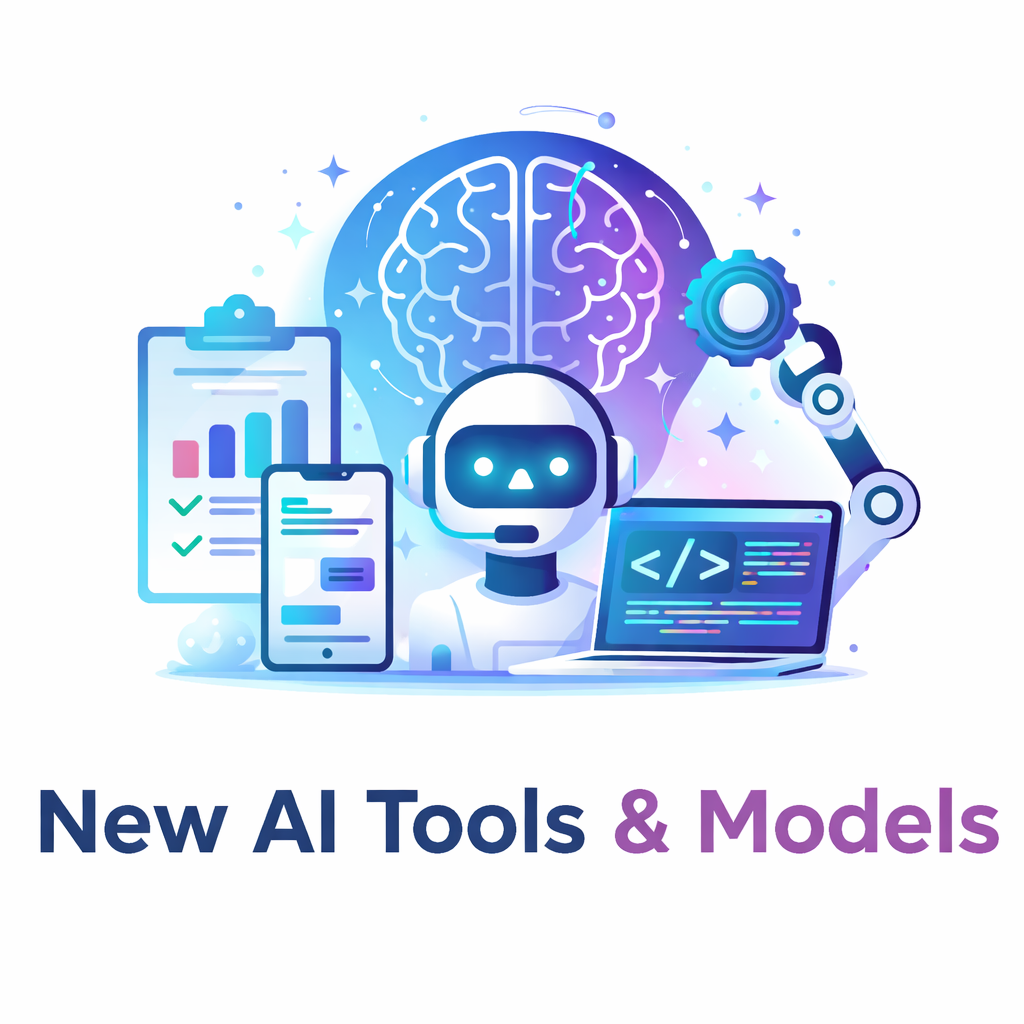
New- AI- Tools - Models

New AI Tools & Models: A Realistic Look at How Artificial Intelligence Is Advancing

Artificial Intelligence has entered a phase of rapid and meaningful transformation. The discussion is no longer limited to futuristic promises or experimental ideas. Today, new AI tools and models are being actively used in real businesses, research environments, creative industries, and everyday workflows. This evolution is not about flashy claims, but about steady improvements in capability, reliability, and practical value.

Modern AI systems are becoming increasingly intelligent, efficient, and aligned with genuine human needs. They are helping people work faster, make better decisions, and solve complex problems that were previously difficult or time-consuming. To understand where AI is heading, it is important to look closely at how new tools and models are actually being developed and applied.

New AI Tools & Models

The Shift from Experimental AI to Practical Systems

In the early stages of AI adoption, many tools were impressive but limited. They worked well in demonstrations but struggled with consistency, accuracy, and real-world complexity. New AI models are addressing these weaknesses by focusing on reasoning, context, and long-term usefulness rather than only speed or creativity.

Today’s AI tools are built with specific use cases in mind. Instead of trying to do everything at once, they are designed to support workflows such as content research, data analysis, customer support, software development, and business strategy. This practical focus has made AI more reliable and easier to integrate into existing systems.

Another major improvement is stability. New models are trained with better data filtering, improved evaluation methods, and stronger safeguards. This reduces errors, hallucinations, and unpredictable outputs, making AI tools more trustworthy for professional use.

Evolution of AI Models: Smarter, Not Just Bigger

While large models still play an important role, the industry is moving beyond the idea that “bigger is always better.” New AI models are increasingly optimized for efficiency, accuracy, and adaptability. This means they can deliver high-quality results without requiring excessive computing resources.

One important development is better reasoning capability. New models are being trained to break down complex problems into logical steps. This allows them to handle tasks such as strategic planning, technical explanations, and multi-step decision-making more effectively.

Another key improvement is contextual awareness. Modern AI models can remember longer conversations, understand intent more clearly, and adjust responses based on tone and purpose. This makes interactions feel more natural and useful, especially in professional settings.

Multimodal AI: Understanding More Than Just Text

A significant advancement in AI tools is the rise of multimodal models. These systems can process and combine different types of information, such as text, images, audio, and video. This allows AI to understand the world in a more complete and human-like way.

For example, a multimodal AI tool can analyze an image, read a related document, and explain the visual content in clear language. In education, this helps students learn from diagrams and charts. In business, it allows teams to analyze presentations, reports, and visuals together.

Multimodal AI is also improving accessibility. People can interact with technology using voice, visuals, or text depending on their preferences or limitations. This makes AI tools more inclusive and practical for a wider audience.

Agentic AI: From Assistance to Action

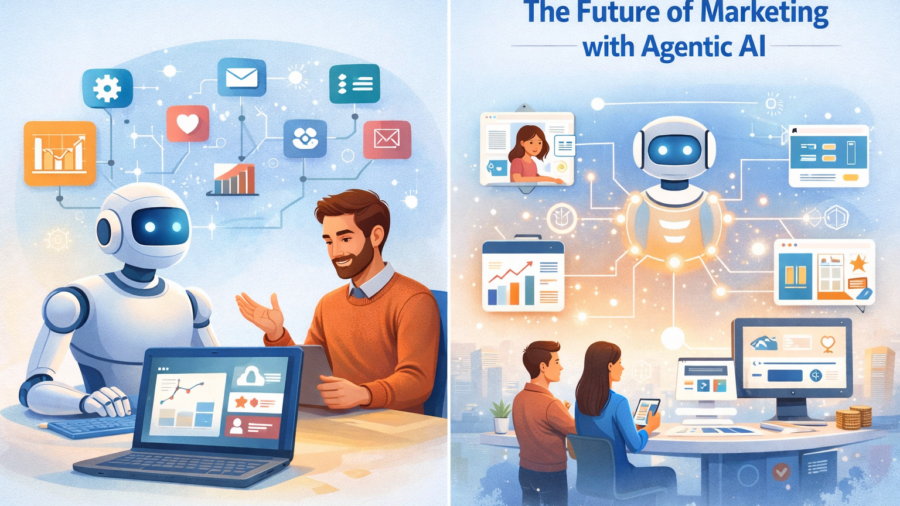
One of the most important trends in new AI tools is the emergence of agentic AI. Traditional AI systems respond to direct instructions and perform isolated tasks. Agentic AI systems, however, are designed to take initiative within defined boundaries.

An agentic AI tool can plan a sequence of actions, monitor progress, adjust strategies, and complete goals with minimal supervision. For instance, in a business environment, an AI agent can analyze market data, identify opportunities, generate reports, and suggest next steps automatically.

This does not mean AI is replacing human judgment. Instead, it acts as a capable assistant that handles repetitive and analytical work, allowing humans to focus on creativity, ethics, and high-level decision-making. When used responsibly, agentic AI significantly increases productivity without reducing control.

AI Tools for Content, Research, and Knowledge Work

Content creation and research are areas where new AI tools are making a measurable impact. Modern AI writing tools are no longer limited to generating generic text. They can now assist with topic research, structure development, tone adaptation, and factual summarization.

Researchers and analysts use AI tools to review large volumes of information, identify patterns, and extract insights quickly. This saves time and reduces manual effort while improving accuracy. Importantly, the best AI tools support human oversight, ensuring that final outputs remain reliable and authentic.

In journalism, blogging, and education, AI is increasingly used as a research assistant rather than a content replacement. This approach maintains quality while improving efficiency.

AI in Software Development and Technical Fields

New AI models are also transforming how software is built and maintained. AI coding assistants can understand existing codebases, suggest improvements, identify bugs, and explain complex logic in simple terms. This is particularly valuable for teams working on large or long-term projects.

Beyond coding, AI tools are being used for system testing, performance monitoring, and security analysis. They can detect unusual behavior, predict potential failures, and recommend fixes before problems escalate.

These tools are not removing the need for skilled developers. Instead, they are reducing repetitive work and helping engineers focus on design, innovation, and problem-solving.

Business and Enterprise AI Tools

In business environments, AI tools are becoming more specialized and data-driven. New AI platforms help companies analyze customer behavior, forecast demand, optimize supply chains, and improve decision-making.

Marketing teams use AI to personalize content, optimize campaigns, and measure performance more accurately. Finance teams rely on AI for risk assessment, fraud detection, and financial modeling. Operations teams use AI to streamline workflows and improve efficiency.

What makes modern business AI tools valuable is their integration with existing systems. Instead of working in isolation, they connect with databases, dashboards, and enterprise software to provide actionable insights.

Focus on Trust, Ethics, and Responsible AI

As AI tools become more powerful, trust and responsibility are critical priorities. Developers are placing greater emphasis on transparency, bias reduction, and user control. New models include safeguards to prevent misuse and ensure outputs align with ethical standards.

Responsible AI also involves protecting user data and respecting privacy. Many modern tools now provide clearer data policies and allow organizations to control how information is stored and processed.

This focus on ethics is not just a regulatory requirement; it is essential for long-term adoption. AI tools that users trust are far more likely to succeed and deliver real value.

What the Future Holds for AI Tools and Models

The future of AI will not be defined by a single breakthrough but by continuous improvement. AI tools will become more personalized, adaptive, and context-aware. Instead of generic assistants, users will interact with AI systems tailored to their specific roles and industries.

AI will also become more deeply integrated into everyday software, operating quietly in the background to enhance productivity. Rather than replacing humans, AI will increasingly act as a collaborative partner.

Those who understand how to use AI thoughtfully and responsibly will gain a significant advantage. The key is not to chase trends blindly, but to adopt tools that genuinely improve quality, efficiency, and decision-making.

Conclusion

New AI tools and models represent a meaningful shift in how technology supports human work. With improved reasoning, multimodal understanding, and practical design, modern AI systems are becoming reliable partners rather than experimental novelties.

As artificial intelligence continues to evolve, its true value will lie in responsible use, human collaboration, and real-world impact. By focusing on quality, trust, and purpose, AI can help individuals and organizations build smarter, more efficient, and more sustainable futures

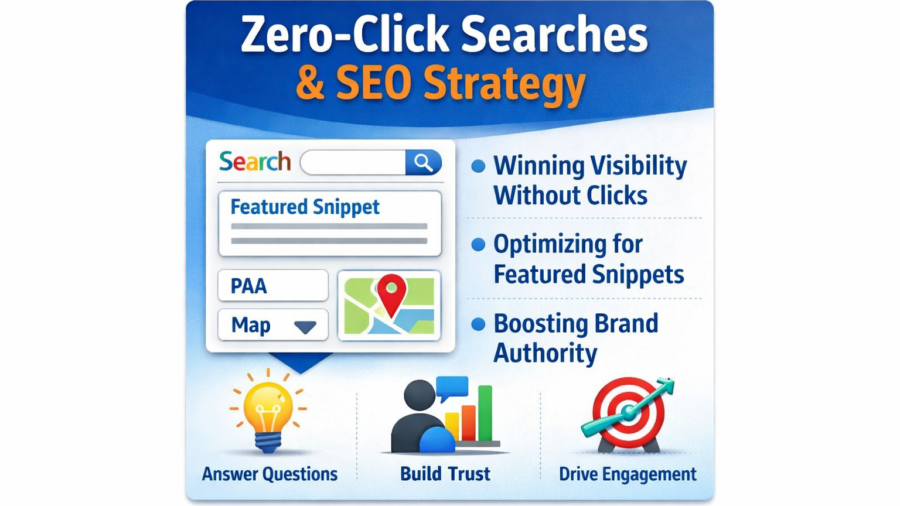
Zero-Click Searches & SEO Strategy How to Win Traffic Without the Click

Zero-Click Searches & SEO Strategy: How to Win Traffic Without the Click

Search behavior has changed more in the last few years than it did in the previous decade. Zero-Click Searches & SEO Strategy: How to Win Traffic Without the Click. Today, users often get their answers directly on Google without having to click on any website. This phenomenon is known as zero-click searches, and it has reshaped the way SEO works. For bloggers, marketers, and website owners, this shift feels frustrating at first—but when understood correctly, it opens new opportunities for visibility, authority, and long-term growth.

Zero-click searches are not the end of SEO. They are the beginning of a smarter, more strategic approach to content optimization.

What Are Zero-Click Searches?

A zero-click search happens when a user searches for something on Google and gets the answer directly on the search results page, without clicking on any website. Google displays information through featured snippets, knowledge panels, People Also Ask boxes, calculators, maps, weather cards, definitions, and AI-generated summaries.

For example, when someone searches “What is SEO?” or “Weather today,” Google provides an instant answer. The user’s intent is satisfied immediately, and no click is required.

According to multiple industry studies, more than 50% of Google searches now end without a click, especially on mobile devices. This trend is growing rapidly due to AI-powered search features and Google’s focus on user experience.

Zero-Click Searches & SEO Strategy How to Win Traffic Without the Click

Why Zero-Click Searches Matter for SEO

Traditional SEO focused heavily on ranking number one and driving traffic to a website. Zero-click searches challenge this mindset. Even if your content ranks at the top, users may never visit your page.

This does not mean your content has failed. In fact, appearing in zero-click features often means Google trusts your content enough to display it prominently. The real challenge is learning how to benefit from visibility even when clicks are reduced.

Understanding zero-click searches helps you:

  • Build brand authority
  • Increase visibility across search features
  • Capture high-intent users
  • Prepare for AI-driven search engines
  • Adapt SEO strategy for long-term sustainability

Types of Zero-Click Search Features

To build a strong SEO strategy, you must first understand where zero-click searches come from.

Featured snippets are the most common source. These are short answers extracted from web pages and shown at the top of search results. Knowledge panels display structured information about people, brands, or topics. People Also Ask boxes provide expandable questions and answers that keep users on Google. AI summaries and instant answers further reduce the need to click.

Local searches are also heavily affected. When users search for “near me” queries, Google Maps, reviews, and business profiles satisfy the intent directly.

Each of these features can reduce traffic—but they also create new visibility opportunities.

The Impact of Zero-Click Searches on Website Traffic

Many website owners notice declining organic traffic despite good rankings. This often leads to confusion and frustration. However, traffic alone is no longer the only metric that matters.

Zero-click searches shift the focus from traffic quantity to traffic quality. Users who still click through after seeing a snippet are usually more interested, more informed, and more likely to convert.

Instead of chasing every click, modern SEO focuses on:

  • Brand recognition
  • Search visibility
  • Authority signals
  • Conversion-ready users
  • Long-term topical relevance

When done correctly, zero-click SEO can improve business outcomes even with fewer visits.

How Zero-Click Searches Change Search Intent

Search intent plays a critical role in zero-click behavior. Informational queries like definitions, quick facts, and simple explanations are most likely to result in zero-click searches. Navigational and transactional queries still generate clicks, especially when users are ready to take action.

This means not all keywords are equal anymore. SEO strategies must prioritize intent-based optimization, not just keyword volume.

Understanding whether a user wants information, comparison, or action helps you decide how much information to reveal and how much curiosity to retain.

Smart SEO Strategy for Zero-Click Searches

The goal is not to avoid zero-click searches, but to optimize for them intelligently.

One effective strategy is to own the featured snippet. When your content appears as the source, it builds trust and authority. Even if users do not click immediately, they remember your brand. Over time, this recognition leads to branded searches and direct traffic.

Another key approach is to structure content clearly. Use concise definitions, logical headings, and clean formatting. Google prefers content that answers questions directly and accurately.

At the same time, avoid giving away everything. Provide the best short answer, but leave room for deeper insights that encourage users to click through for more details.

Content Optimization for Zero-Click SEO

Content must be written for both users and search engines. Clear language, natural flow, and genuine expertise matter more than keyword stuffing.

Answer questions early in the content. Provide context and value beyond the basic answer. Use natural language that mirrors how people speak and search.

Topical depth is also critical. Instead of writing many shallow articles, focus on comprehensive content that covers a topic fully. Google increasingly favors content that demonstrates real understanding rather than surface-level information.

This approach aligns well with AI-powered search and generative engines.

Brand Visibility Over Clicks

One of the biggest mindset shifts in modern SEO is valuing visibility over clicks. If your brand consistently appears in search results, snippets, and AI answers, you become a trusted source.

Over time, users start searching for your brand name directly. These branded searches are not affected by zero-click behavior in the same way and often lead to higher conversion rates.

Strong branding ensures that even if Google shows the answer, your name remains associated with expertise.

Leveraging Zero-Click Searches for Business Growth

Zero-click searches can actually support business goals when used correctly. For service-based businesses, appearing in local packs and knowledge panels increases trust. For bloggers, appearing in snippets establishes authority. For affiliate marketers, focusing on comparison and transactional keywords reduces zero-click risk.

Instead of fighting Google, work with its ecosystem. Optimize your Google Business Profile, use structured data where relevant, and ensure your content is accurate and up to date.

SEO is no longer just about rankings—it’s about presence across the entire search experience.

Measuring Success in a Zero-Click World

Traditional metrics like organic sessions are no longer enough. Modern SEO success is measured through:

  • Impressions and visibility
  • Branded search growth
  • Engagement and conversions
  • Content authority
  • Long-term keyword ownership

Google Search Console becomes more important than ever, as it shows how often your content appears—even if users do not click.

Understanding these metrics helps you make smarter decisions and avoid unnecessary panic over traffic fluctuations.

Zero-click searches are closely connected to AI-driven search engines and generative answers. As AI continues to summarize content, SEO will shift further toward answer optimization, authority, and trustworthiness.

Websites that focus on originality, experience, and real value will survive and grow. Those relying on thin, repetitive content will struggle.

The future belongs to creators who understand that SEO is not about gaming algorithms, but about serving users better than anyone else.

SEO VS LLM

Local SEO for LLMs

Introduction: What is Local SEO for LLMs?

Local SEO for LLMs is rapidly emerging as a new discipline at the intersection of traditional search engine optimization and artificial intelligence–driven discovery. As large language models like ChatGPT, Gemini, and Claude become primary tools for finding information, businesses must rethink how local visibility works in an AI-first world. Earlier, local SEO focused mainly on ranking in Google Maps, local packs, and organic search results. Today, LLMs synthesize information from multiple sources to answer user queries directly, which means local businesses are no longer competing only for rankings, but for inclusion in AI-generated responses. Understanding how LLMs interpret, evaluate, and present local data is essential for future-proofing local SEO strategies.

At its core, local SEO for LLMs is about ensuring that AI systems can confidently recognize a business as relevant, trustworthy, and geographically accurate. LLMs do not crawl the web in real time like search engines; instead, they rely on training data, structured signals, authoritative sources, and real-time plugins or APIs when available. This changes the optimization mindset from keyword stuffing and backlinks to clarity, consistency, and entity-based optimization. Businesses must communicate who they are, where they operate, and what they offer in a way that machines can easily understand and verify across the web.

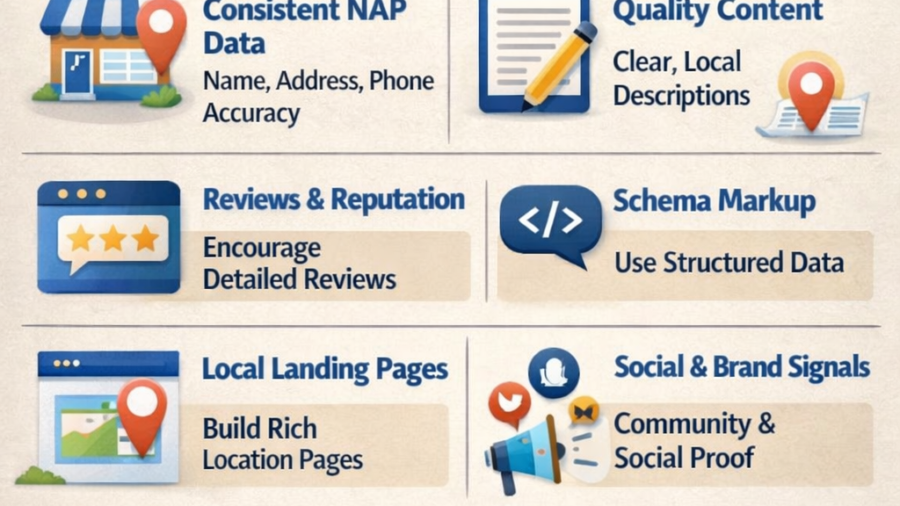
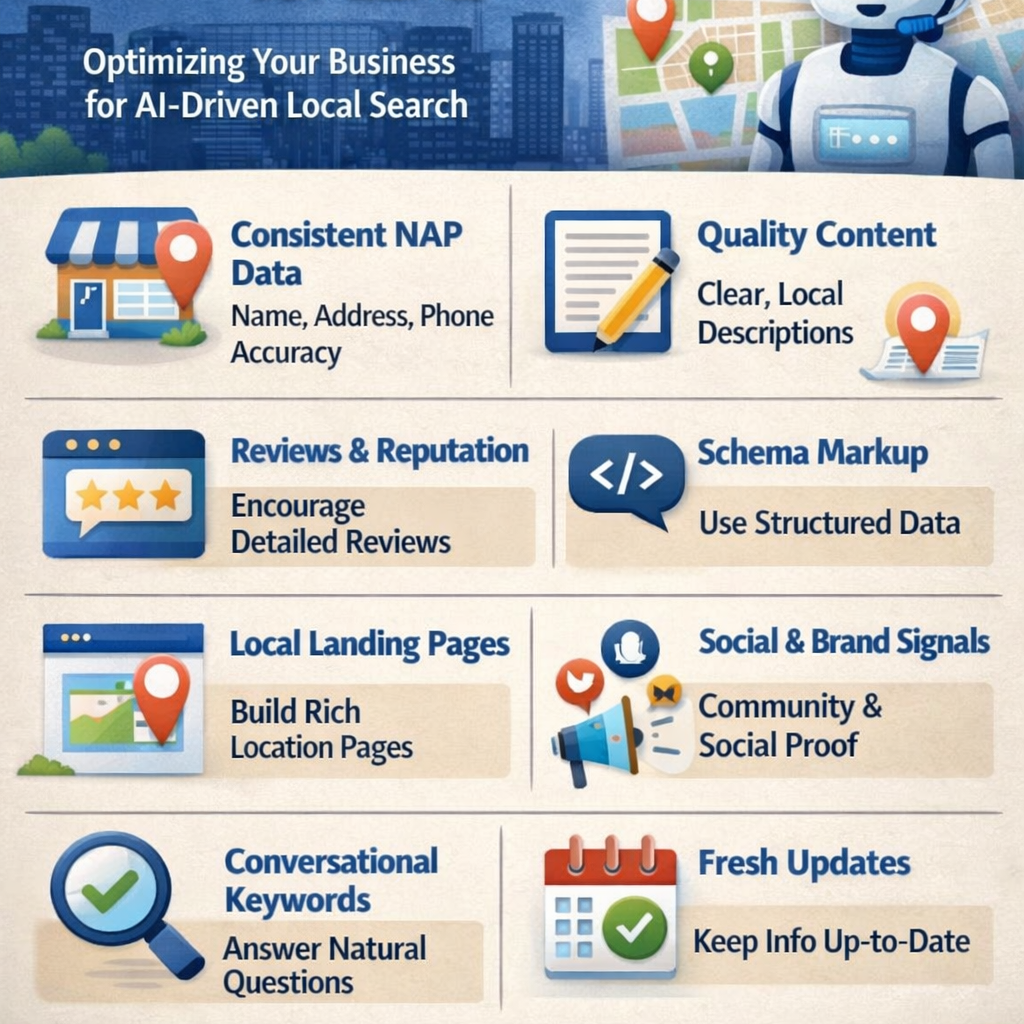
One of the most important foundations of local SEO for LLMs is entity recognition. LLMs work by understanding entities such as businesses, locations, services, and brands, and then mapping relationships between them. If a business’s name, address, phone number, and category are inconsistent across platforms, it weakens the AI’s confidence in that entity. Consistent NAP data across Google Business Profile, Bing Places, Apple Maps, Yelp, social platforms, and local directories creates a strong entity footprint. When an LLM sees the same information repeated across authoritative sources, it is more likely to include that business in its responses to local queries.

Local SEO for LLMs
Local SEO for LLMs

Another critical factor is the quality of business descriptions and contextual content. LLMs are designed to understand natural language, not just keywords. Local businesses should invest in well-written, human-focused descriptions on their websites and profiles that clearly explain services, service areas, and unique value propositions. Instead of listing generic phrases like “best service provider,” content should describe real-world use cases, neighborhoods served, customer problems solved, and local relevance. This narrative-style content aligns perfectly with how LLMs process and generate responses, increasing the chances of being cited or summarized by AI tools.

Reviews and reputation signals play an expanded role in local SEO for LLMs. Traditional search engines use reviews as ranking factors, but LLMs treat reviews as qualitative data that helps shape recommendations. A business with a large volume of authentic, descriptive reviews mentioning specific services and locations provides rich language data for AI models. When users ask an LLM for “the best plumber in South Delhi” or “a reliable café near Connaught Place,” the model is more likely to recommend businesses that have strong review signals with location-specific context. Encouraging customers to leave detailed, honest reviews, therefore, becomes an AI-visibility strategy, not just a trust-building exercise.

Structured data is another pillar that bridges local SEO and LLM understanding. Schema markup, such as LocalBusiness, Organization, Product, and Review schemas, helps define information in a machine-readable format. While LLMs do not rely solely on schema, structured data improves clarity and reduces ambiguity when AI systems parse web content. Adding accurate schema to location pages, contact pages, and service pages strengthens the business’s digital identity and supports better AI interpretation, especially when combined with consistent citations and authoritative backlinks.

Local content creation must also evolve for LLM optimization. Instead of writing thin city pages stuffed with keywords, businesses should publish meaningful local content that demonstrates expertise and community involvement. Articles about local events, guides, case studies, and partnerships signal a genuine local presence. LLMs value depth and relevance, so content that reflects real local knowledge is more likely to be trusted. For example, a restaurant writing about sourcing ingredients from nearby markets or a clinic explaining healthcare challenges in a specific area provides contextual signals that AI models can use when answering local queries.

Another often overlooked aspect of local SEO for LLMs is brand authority beyond search engines. LLMs draw information from a wide range of sources, including news websites, forums, Q&A platforms, and social media discussions. Mentions in local news, collaborations with recognized organizations, and participation in community initiatives help build a broader digital footprint. When a brand is discussed positively and consistently across the web, it increases the likelihood that LLMs will recognize it as a credible local authority.

Voice search and conversational queries further amplify the importance of LLM-focused local SEO. Many local searches are now phrased as natural questions, such as “Where can I find a good gym near me?” or “Which digital marketing agency in Jaipur is best for startups?” LLMs excel at answering these queries, but only if they have access to clear, conversational content. Optimizing FAQs, using question-based headings, and writing in a natural tone helps align website content with how people speak to AI assistants, improving local discoverability.

Accuracy and freshness of information are also critical challenges. Since LLMs may rely on cached or historical data, outdated business information can lead to incorrect recommendations. Regularly updating websites, business profiles, and directories ensures that real-time tools and AI-integrated search systems access the most current data. Posting updates, announcements, and new content signals activity and relevance, which are important trust indicators for both users and AI systems.

Trustworthiness, or what can be described as AI-level E-E-A-T, is becoming central to local SEO for LLMs. Experience, expertise, authoritativeness, and trustworthiness are not just search guidelines but essential qualities for AI recommendations. Highlighting real team members, showcasing credentials, displaying transparent contact information, and sharing genuine customer stories all contribute to a stronger trust profile. LLMs aim to reduce misinformation, so they tend to favor businesses with clear ownership, verifiable details, and a positive online reputation.

As AI-generated answers reduce the need for users to click through multiple search results, being “the answer” becomes more valuable than being ranked first. Local SEO for LLMs is therefore not about gaming algorithms, but about building a coherent, credible, and human-centered digital presence. Businesses that focus on clarity, consistency, and real local value will naturally align with how LLMs select and present information.

In the coming years, local SEO will continue to shift from keyword-driven tactics to entity-driven and context-driven optimization. LLMs will increasingly act as intermediaries between users and businesses, shaping discovery in subtle but powerful ways. Those who adapt early by optimizing for AI understanding, not just search engine rankings, will gain a significant competitive advantage. Local SEO for LLMs is not a replacement for traditional SEO, but an evolution that rewards authenticity, relevance, and genuine local engagement in an AI-powered world.

Finally, local SEO for LLMs represents a shift toward ethical and transparent optimization. Manipulative tactics, fake reviews, or misleading information may temporarily work in traditional SEO but are risky in AI-driven systems. LLMs are designed to detect patterns of misinformation and reduce exposure to unreliable sources. Businesses that focus on honest communication, real customer experiences, and accurate local data are better positioned for sustainable success.

Why You Need a New Local SEO AI Tool Stack

You need a new local SEO AI tool stack because local search is no longer limited to blue links, map packs, and directory rankings. The way people discover nearby businesses has shifted toward AI-driven experiences where answers are generated, not searched for. When users ask questions like “Which is the best clinic near me?” or “Find a trusted service provider in my area,” AI systems such as large language models, voice assistants, and AI-powered search interfaces decide what to recommend. Traditional SEO tools were designed to track rankings and keywords, but they are not equipped to measure how your business is understood, trusted, or surfaced by AI systems. This gap makes a new local SEO AI tool stack not just helpful, but necessary.

One of the biggest reasons a new tool stack is required is that AI systems operate on entity understanding rather than keyword matching. Older tools focus heavily on keyword positions and backlink counts, but AI evaluates businesses as entities with attributes like location, reputation, expertise, and consistency across the web. A modern AI-driven local SEO stack helps you monitor and manage these entity signals. It allows you to track name, address, and phone consistency, brand mentions, review sentiment, and contextual relevance, all of which directly influence how AI models interpret your business without tools that surface these insights.