Marketing today is far more than producing attractive campaigns or posting creatively on social media. Modern businesses operate in an environment where customers are constantly connected, information travels instantly, Marketing Intelligence: The New Engine of Business Growth, and competitors are only a click away. In such a landscape, the companies that succeed are those that do not rely on guesswork. They learn continuously from data, understand changing behavior patterns, and make decisions grounded in evidence. This disciplined approach is known as marketing intelligence, and it has become one of the most important foundations for growth in the digital age.
What Is Marketing Intelligence?
Marketing intelligence refers to the tools, processes, and insights used to monitor the market environment and turn information into an actionable strategy. It includes:
- customer behavior and preferences
- competitor performance and positioning
- product demand and market opportunities
- pricing trends and revenue patterns
- campaign performance and attribution data
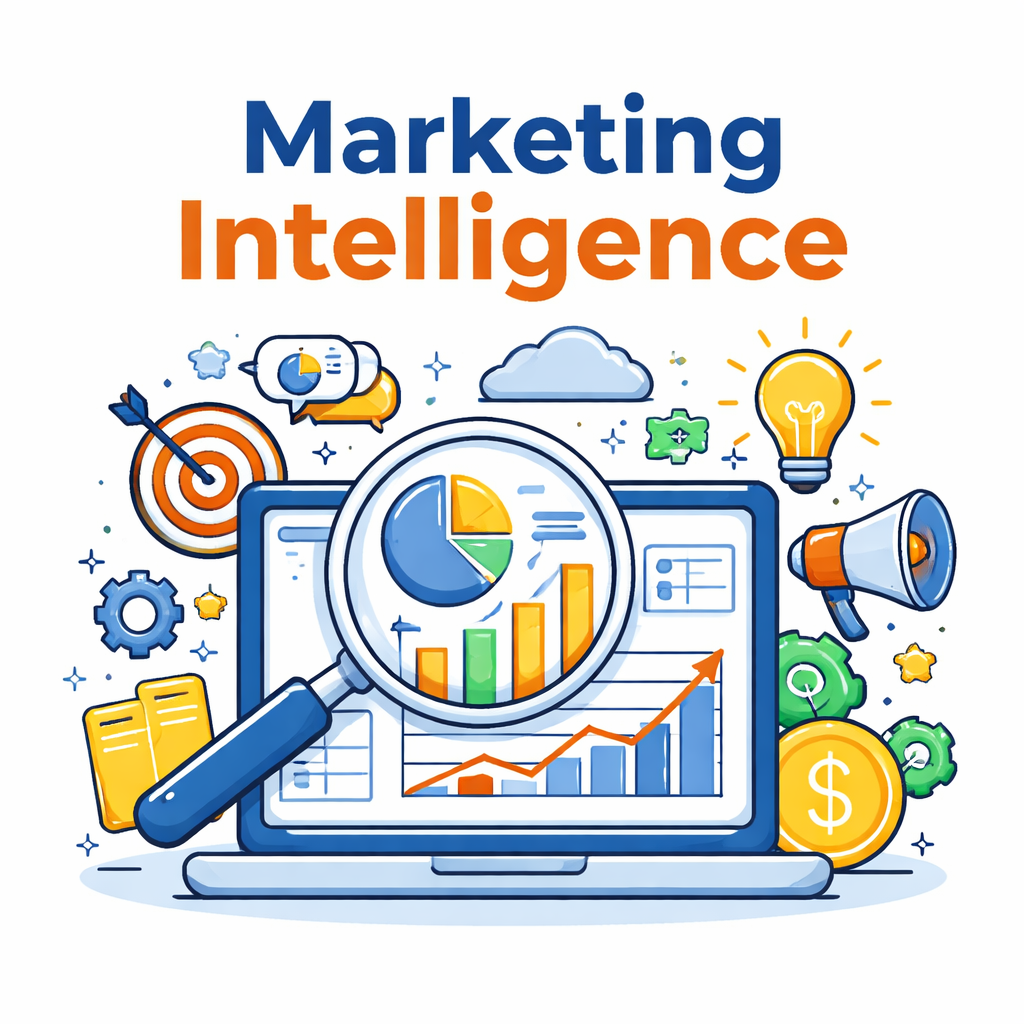
Marketing intelligence can be described as the practice of collecting, analyzing, and applying information about markets, customers, competitors, and performance to guide strategy and action. It is not limited to reports or analytics dashboards; instead, it represents a mindset in which every significant marketing decision is informed by insight rather than assumption. When a business uses marketing intelligence effectively, it develops a clearer picture of who its customers are, what they value, how the market around them is evolving, and what actions are likely to create the best outcomes. This clarity allows organizations to move from reactive marketing to a proactive strategy.
At its core, marketing intelligence is about understanding people. Every purchase decision carries emotion, motivation, and context. Data alone is not enough unless it is transformed into insight about human behavior. Companies use sources such as website interactions, purchase histories, search patterns, and direct feedback to learn how their audiences think and act. Over time, these patterns reveal which messages resonate, which products solve real problems, and which experiences cause frustration. Businesses that pay attention to these signals can personalize communication, improve customer experience, and build stronger long-term relationships. Instead of pushing generic advertising, they speak in ways that feel relevant and meaningful.
Marketing intelligence also plays a critical role in understanding competition. No business operates in isolation, and even the most innovative product will face alternatives in the market. Intelligent organizations study how competitors position themselves, how they price, how they communicate, and how customers respond to them. This is not simply imitation; it is learning. By identifying strengths and weaknesses in the competitive landscape, a business can position its own offering more clearly. It may discover an underserved segment, a gap in messaging, or an opportunity to differentiate through quality or service. Competitor awareness strengthens strategic decision-making and prevents companies from being surprised by industry shifts.
Another important dimension of marketing intelligence involves recognizing broader market trends. Technology changes consumer expectations, economic conditions influence purchasing power, and cultural movements reshape priorities. For example, concerns about sustainability, convenience, and personalization have transformed entire industries in recent years. A business that monitors these external signals can adapt its strategy before trends become unavoidable. It might innovate new products, redesign services, or reposition its brand identity. In this sense, marketing intelligence helps organizations not only respond to the present but also prepare for the future.
The rapid rise of artificial intelligence has significantly expanded the capabilities of marketing intelligence. Earlier, data analysis was mostly descriptive: companies looked backward at what had happened. Today, AI enables predictive and even prescriptive insight. Sophisticated algorithms can identify hidden relationships within massive datasets, anticipate behavior patterns, and recommend the next best action. This evolution enables marketers to forecast demand, predict customer churn, personalize at scale, and optimize campaigns in real-time. Instead of spending weeks evaluating performance manually, teams receive instant guidance that supports faster, more confident decision-making. However, AI does not replace human judgment; rather, it enhances it. Human creativity, ethics, and strategic thinking remain essential in interpreting insights responsibly.
The practical value of marketing intelligence becomes clear when it influences everyday business choices. A brand planning a product launch can evaluate search data, customer conversations, and competitive offerings to refine its positioning. An e-commerce company can analyze browsing behavior to redesign its purchasing journey and reduce abandonment. A service provider can monitor reviews and sentiment to identify recurring dissatisfaction and improve operations. In each case, the common thread is that decisions are grounded in evidence. Marketing intelligence turns scattered information into coherent understanding, and understanding into meaningful action.
Building strong marketing intelligence does not happen accidentally; it requires deliberate structure. Organizations begin by defining what they need to know, whether it relates to improving retention, entering a new market, or increasing campaign effectiveness. They then identify relevant sources of information and ensure that data is reliable and ethically gathered. Technology systems help bring information together, but the real transformation occurs when teams collaborate around shared insights. Silos weaken intelligence. When sales, marketing, product, and customer service share information, a richer picture of the customer emerges, and smarter decisions follow.
Despite its benefits, marketing intelligence presents challenges. Many companies struggle with overwhelming amounts of data, yet lack clarity about which metrics truly matter. Others face issues of data quality, where incomplete or inconsistent records produce misleading conclusions. There is also a growing responsibility to manage information with respect for privacy and regulation. Customers increasingly expect transparency and control over how their data is used. Businesses must therefore balance analytical ambition with ethical practice. The strongest brands will be those that treat intelligence not only as a technical capability but also as a trust-based relationship with their audiences.
Looking ahead, the role of marketing intelligence will continue to expand. Real-time analysis will become standard as digital interactions increase, and decision-support systems will integrate more closely with everyday marketing tools. Personalization will deepen as companies learn to predict needs rather than simply respond to them. At the same time, qualitative understanding will remain vital. Numbers describe what is happening, but human interpretation explains why it matters. The organizations that combine technology with empathy will enjoy the greatest advantage, because intelligence is ultimately about understanding people rather than just processing data.
In conclusion, marketing intelligence represents a powerful shift in how businesses operate. It moves companies from instinct-driven choices toward informed strategy, from fragmented data toward integrated understanding, and from reactive behavior toward forward-looking planning. In an environment defined by rapid change and constant competition, this capability is no longer optional. Whether a small startup or a global enterprise, any organization that wishes to grow must learn to listen to its market, study its customers, analyze its performance, and act upon insight with purpose. When marketing intelligence is embraced fully, it becomes more than a set of tools; it becomes a culture of learning that drives innovation, strengthens relationships, and creates sustainable competitive advantage.