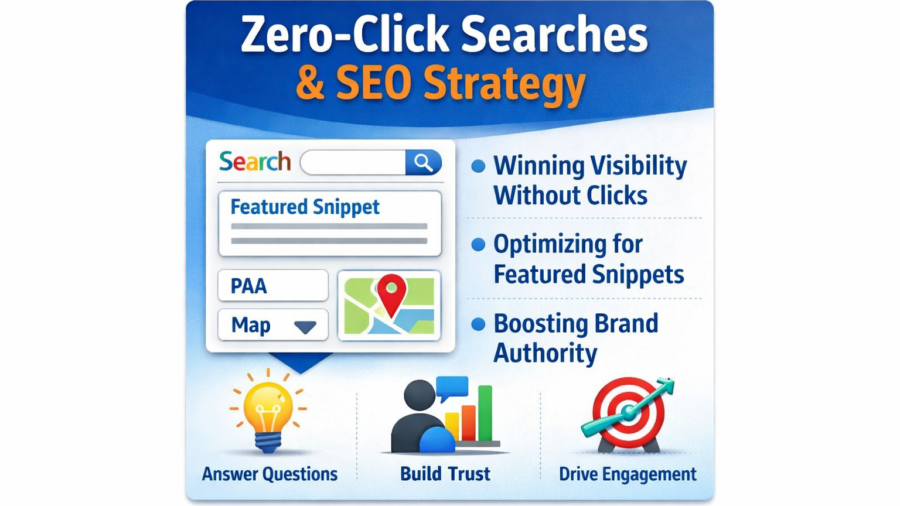
Search behavior has changed more in the last few years than it did in the previous decade. Zero-Click Searches & SEO Strategy: How to Win Traffic Without the Click. Today, users often get their answers directly on Google without having to click on any website. This phenomenon is known as zero-click searches, and it has reshaped the way SEO works. For bloggers, marketers, and website owners, this shift feels frustrating at first—but when understood correctly, it opens new opportunities for visibility, authority, and long-term growth.
Zero-click searches are not the end of SEO. They are the beginning of a smarter, more strategic approach to content optimization.
What Are Zero-Click Searches?
A zero-click search happens when a user searches for something on Google and gets the answer directly on the search results page, without clicking on any website. Google displays information through featured snippets, knowledge panels, People Also Ask boxes, calculators, maps, weather cards, definitions, and AI-generated summaries.
For example, when someone searches “What is SEO?” or “Weather today,” Google provides an instant answer. The user’s intent is satisfied immediately, and no click is required.
According to multiple industry studies, more than 50% of Google searches now end without a click, especially on mobile devices. This trend is growing rapidly due to AI-powered search features and Google’s focus on user experience.
Why Zero-Click Searches Matter for SEO
Traditional SEO focused heavily on ranking number one and driving traffic to a website. Zero-click searches challenge this mindset. Even if your content ranks at the top, users may never visit your page.
This does not mean your content has failed. In fact, appearing in zero-click features often means Google trusts your content enough to display it prominently. The real challenge is learning how to benefit from visibility even when clicks are reduced.
Understanding zero-click searches helps you:
- Build brand authority
- Increase visibility across search features
- Capture high-intent users
- Prepare for AI-driven search engines
- Adapt SEO strategy for long-term sustainability
Types of Zero-Click Search Features
To build a strong SEO strategy, you must first understand where zero-click searches come from.
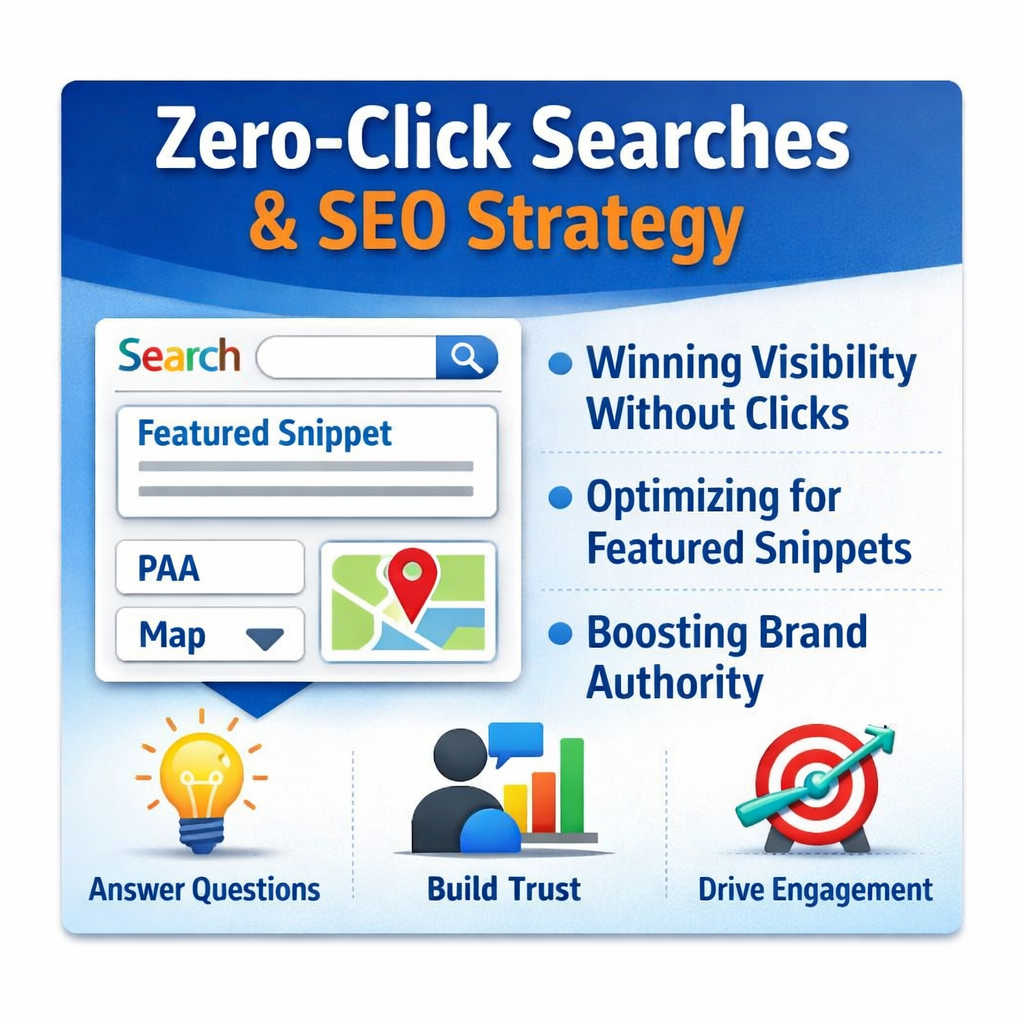
Featured snippets are the most common source. These are short answers extracted from web pages and shown at the top of search results. Knowledge panels display structured information about people, brands, or topics. People Also Ask boxes provide expandable questions and answers that keep users on Google. AI summaries and instant answers further reduce the need to click.
Local searches are also heavily affected. When users search for “near me” queries, Google Maps, reviews, and business profiles satisfy the intent directly.
Each of these features can reduce traffic—but they also create new visibility opportunities.
The Impact of Zero-Click Searches on Website Traffic
Many website owners notice declining organic traffic despite good rankings. This often leads to confusion and frustration. However, traffic alone is no longer the only metric that matters.
Zero-click searches shift the focus from traffic quantity to traffic quality. Users who still click through after seeing a snippet are usually more interested, more informed, and more likely to convert.
Instead of chasing every click, modern SEO focuses on:
- Brand recognition
- Search visibility
- Authority signals
- Conversion-ready users
- Long-term topical relevance
When done correctly, zero-click SEO can improve business outcomes even with fewer visits.
How Zero-Click Searches Change Search Intent
Search intent plays a critical role in zero-click behavior. Informational queries like definitions, quick facts, and simple explanations are most likely to result in zero-click searches. Navigational and transactional queries still generate clicks, especially when users are ready to take action.
This means not all keywords are equal anymore. SEO strategies must prioritize intent-based optimization, not just keyword volume.
Understanding whether a user wants information, comparison, or action helps you decide how much information to reveal and how much curiosity to retain.
Smart SEO Strategy for Zero-Click Searches
The goal is not to avoid zero-click searches, but to optimize for them intelligently.
One effective strategy is to own the featured snippet. When your content appears as the source, it builds trust and authority. Even if users do not click immediately, they remember your brand. Over time, this recognition leads to branded searches and direct traffic.
Another key approach is to structure content clearly. Use concise definitions, logical headings, and clean formatting. Google prefers content that answers questions directly and accurately.
At the same time, avoid giving away everything. Provide the best short answer, but leave room for deeper insights that encourage users to click through for more details.
Content Optimization for Zero-Click SEO
Content must be written for both users and search engines. Clear language, natural flow, and genuine expertise matter more than keyword stuffing.
Answer questions early in the content. Provide context and value beyond the basic answer. Use natural language that mirrors how people speak and search.
Topical depth is also critical. Instead of writing many shallow articles, focus on comprehensive content that covers a topic fully. Google increasingly favors content that demonstrates real understanding rather than surface-level information.
This approach aligns well with AI-powered search and generative engines.
Brand Visibility Over Clicks
One of the biggest mindset shifts in modern SEO is valuing visibility over clicks. If your brand consistently appears in search results, snippets, and AI answers, you become a trusted source.
Over time, users start searching for your brand name directly. These branded searches are not affected by zero-click behavior in the same way and often lead to higher conversion rates.
Strong branding ensures that even if Google shows the answer, your name remains associated with expertise.
Leveraging Zero-Click Searches for Business Growth
Zero-click searches can actually support business goals when used correctly. For service-based businesses, appearing in local packs and knowledge panels increases trust. For bloggers, appearing in snippets establishes authority. For affiliate marketers, focusing on comparison and transactional keywords reduces zero-click risk.
Instead of fighting Google, work with its ecosystem. Optimize your Google Business Profile, use structured data where relevant, and ensure your content is accurate and up to date.
SEO is no longer just about rankings—it’s about presence across the entire search experience.
Measuring Success in a Zero-Click World
Traditional metrics like organic sessions are no longer enough. Modern SEO success is measured through:
- Impressions and visibility
- Branded search growth
- Engagement and conversions
- Content authority
- Long-term keyword ownership
Google Search Console becomes more important than ever, as it shows how often your content appears—even if users do not click.
Understanding these metrics helps you make smarter decisions and avoid unnecessary panic over traffic fluctuations.
The Future of SEO with Zero-Click and AI Search
Zero-click searches are closely connected to AI-driven search engines and generative answers. As AI continues to summarize content, SEO will shift further toward answer optimization, authority, and trustworthiness.
Websites that focus on originality, experience, and real value will survive and grow. Those relying on thin, repetitive content will struggle.
The future belongs to creators who understand that SEO is not about gaming algorithms, but about serving users better than anyone else.