Introduction: What is Agentic AI and Marketing Copilots: The Future of Intelligent Growth
Artificial intelligence has moved beyond automation and prediction into a new phase defined by autonomy, reasoning, and collaboration. Google Search Engine. At the center of this transformation are agentic AI systems and marketing copilots, technologies that do not merely assist marketers but actively participate in decision-making, execution, and optimization. Unlike traditional tools that wait for instructions, agenticAI Agentic AI and Marketing Copilots: The Future of Intelligent Growth can understand objectives, plan actions, adapt to real-time feedback, and continuously improve outcomes. This shift is redefining how marketing strategies are built, managed, and scaled.
Agentic AI refers to systems capable of acting as independent agents. These systems can perceive their environment, set sub-goals, choose actions, and learn from results. In marketing, Agentic AI and Marketing Copilots: The Future of Intelligent Growth, this means AI is no longer limited to generating content or analyzing reports after the fact. Instead, it can proactively identify opportunities, test strategies, allocate resources, and adjust campaigns without constant human intervention. The role of the marketer evolves from executor to strategist and supervisor, guiding the AI rather than controlling every step.
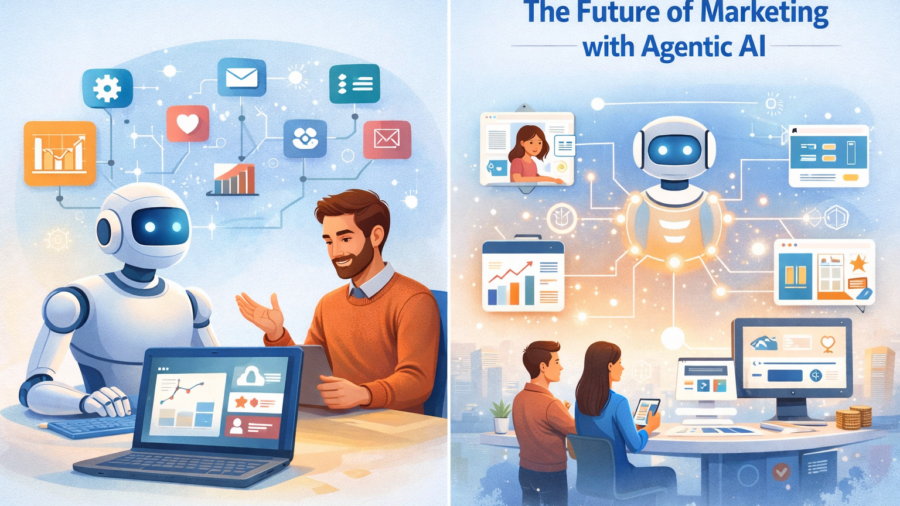
Marketing copilots are a practical expression of agentic AI in everyday workflows. They are designed to work alongside human marketers, offering real-time suggestions, executing tasks, and learning preferences over time. A marketing copilot can draft campaign messaging, personalize customer journeys, optimize ad spend, and monitor performance simultaneously. What makes these systems powerful is not just speed but context awareness. They understand brand voice, target audiences, business goals, and market conditions, allowing them to operate with a level of nuance that was previously impossible.
The emergence of agentic AI is driven by advancements in large language models, reinforcement learning, and multi-modal understanding. These technologies allow AI to reason across text, data, visuals, and user behavior. In marketing environments where signals are complex and constantly changing, this capability is crucial. An agentic system can analyze customer interactions across channels, detect patterns that humans might miss, and take coordinated actions across platforms. This creates a more cohesive and responsive marketing ecosystem.
One of the most significant impacts of agentic AI in marketing is its ability to shift campaigns from reactive to proactive. Traditional marketing often relies on historical data and delayed reporting. By the time insights are acted upon, opportunities may already be lost. Agentic AI operates in near real time. It can recognize declining engagement, rising acquisition costs, or emerging audience segments as they happen and respond immediately. This responsiveness allows brands to stay aligned with customer needs rather than constantly catching up.
Personalization reaches a new level with marketing copilots powered by agentic AI. Instead of segment-based personalization, which treats users as groups, agentic systems enable individual-level adaptation. Each interaction becomes part of a continuous learning loop. The AI understands not just what a user clicked, but why they might have done so, and what they are likely to want next. This results in experiences that feel more relevant, timely, and human, even though they are powered by machines.
The Future of Marketing with Agentic AI
Agentic AI and marketing copilots signal a shift toward marketing systems that think, learn, and act in real time. The future of marketing is not about replacing humans with machines but about creating partnerships where each complements the other’s strengths. AI brings speed, scale, and pattern recognition, while humans provide creativity, empathy, and ethical judgment.
As this collaboration deepens, marketing becomes more adaptive, customer-centric, and strategically aligned. Organizations that embrace agentic AI responsibly will not only achieve better performance but also deliver experiences that feel more meaningful and human. In this sense, agentic AI does not distance marketing from people; it brings it closer to them.
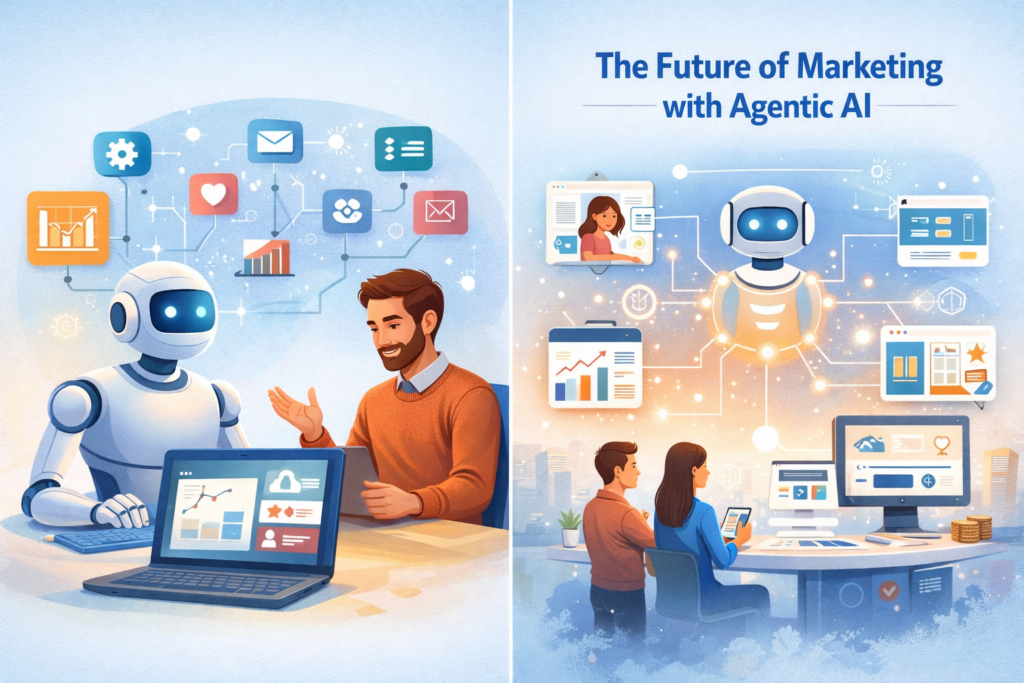
The future of marketing with agentic AI will be defined by systems that do far more than assist with tasks or analyze past performance. Agentic AI introduces a new marketing paradigm in which intelligent systems can understand objectives, plan strategies, execute actions, and continuously adapt based on real-world feedback. Instead of functioning as isolated tools, these AI agents will operate as interconnected decision-makers across the entire marketing ecosystem, enabling brands to respond to market changes with speed, precision, and strategic coherence.
As agentic AI matures, marketing will shift from reactive campaign management to proactive growth orchestration. AI agents will be able to anticipate customer needs, identify emerging trends before they become obvious, and adjust messaging, channels, and budgets automatically. This capability will allow brands to remain consistently relevant in fast-moving markets. Marketing strategies will no longer be fixed plans reviewed quarterly but living systems that evolve daily through continuous learning and experimentation.
Personalization will reach an unprecedented level in the agentic AI-driven future. Rather than relying on static segments, AI agents will understand individuals as dynamic profiles shaped by behavior, context, and intent. Every interaction will refine the system’s understanding of a customer, allowing brands to deliver experiences that feel timely, intuitive, and genuinely helpful. This kind of personalization will strengthen trust, as customers engage with brands that seem to understand them rather than simply target them.
Content and creativity will also be transformed. Agentic AI will not replace human creativity but will amplify it by handling ideation testing, performance analysis, and optimization at scale. Marketers will focus on defining brand narratives, emotional resonance, and ethical boundaries, while AI agents ensure that content is delivered in the right form, to the right audience, at the right moment. Over time, these systems will develop a deep understanding of what drives engagement and loyalty, allowing creativity to be guided by insight rather than guesswork.
Decision-making in marketing will become faster and more confident as agentic AI reduces uncertainty. By synthesizing complex data across channels and touchpoints, AI agents will surface meaningful insights and act on them in real time. This will eliminate delays caused by manual analysis and fragmented reporting. Marketers will move from being overwhelmed by data to being empowered by clarity, focusing on strategic direction while AI handles operational execution.
Trust, governance, and ethics will play a central role in shaping this future. As AI agents gain autonomy, organizations will need clear frameworks to ensure transparency, accountability, and alignment with brand values. Human oversight will remain essential, not to control every action, but to guide intent, set boundaries, and ensure responsible use. The most successful brands will be those that treat agentic AI as a partner governed by human judgment rather than a system left to operate unchecked.
Ultimately, the future of marketing with agentic AI is not about replacing marketers but redefining their role. Marketers will become architects of intelligent systems, curators of brand meaning, and stewards of customer trust. Agentic AI will handle complexity, scale, and speed, allowing humans to focus on creativity, empathy, and strategic vision. Together, this collaboration will create marketing that is more adaptive, more human-centered, and more effective than ever before.