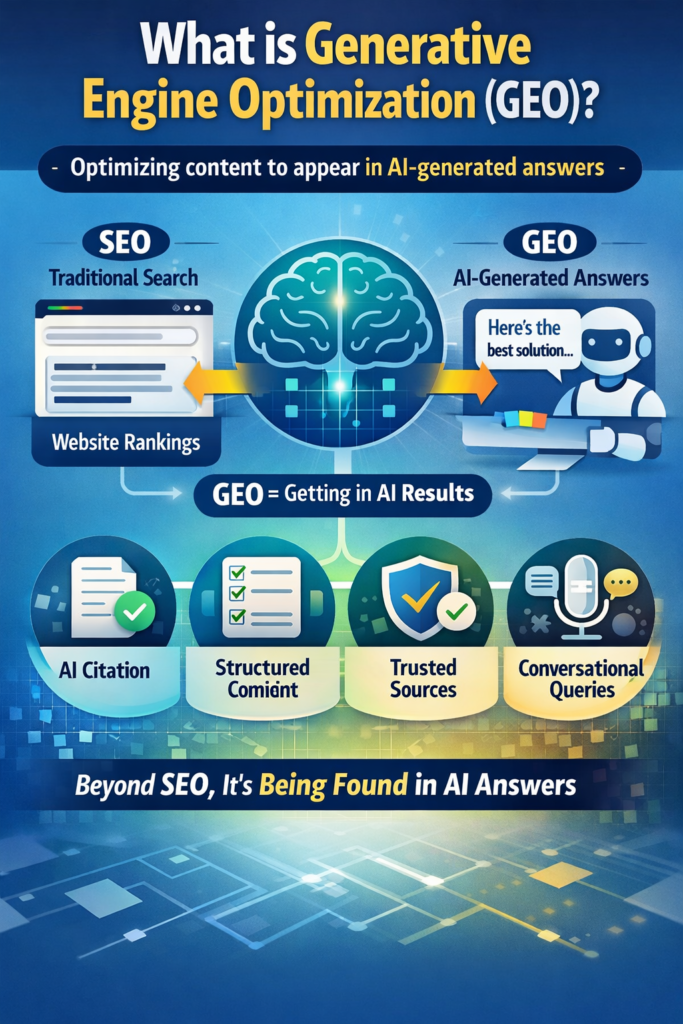
Introduction: What is Generative Engine Optimization (GEO)?
Generative Engine Optimization is the practice of optimizing digital content to improve its visibility and likelihood of being referenced within the responses generated by AI-driven platforms, often called generative engines or answer engines. The term was formally introduced in a pivotal 2023 academic paper by researchers wordpress security from Princeton University and other institutions, who defined it as “a new paradigm that helps content creators improve the visibility of their content in answers by generative engine optimization.
Unlike traditional Search Engine Optimization (SEO), which focuses on ranking in a list of blue links, GEO aims to have your content integrated into a single, synthesized answer. The goal is to become a source that AI models draw from, quote, or cite when constructing responses to user queries
Economic and Platform Incentives: The business models are also diverging. Traditional search is largely ad-driven, while many leading AI platforms are based on subscription models. This changes the incentive structure; AI platforms prioritize user satisfaction and accurate, helpful answers over ad revenue from clicks, which in turn changes what kind of content they favor.
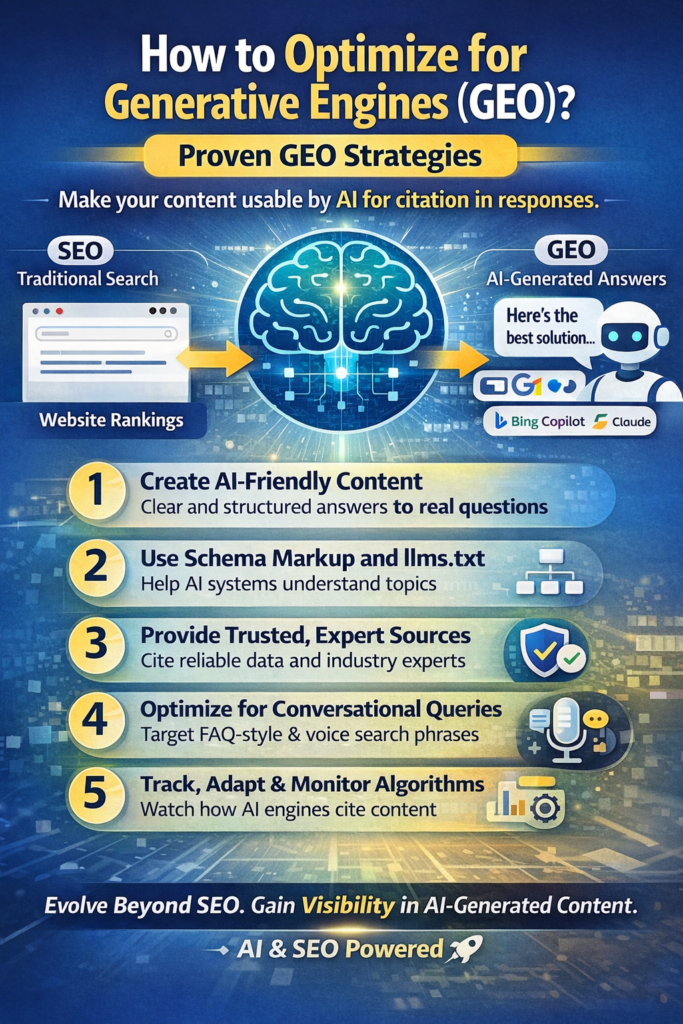
How to Optimize for Generative Engines: Proven GEO Strategies
Research, including the original Princeton study that analyzed 10,000 queries, provides a data-backed roadmap for GEO. The most effective tactics boosted source visibility in AI responses by 30-40%. Here are the core strategies:
1. Structure Content for Machine Parsing
AI models are not human readers. They need to extract information quickly and reliably.
Lead with Direct Answers: For question-based queries, state the concise answer in the first 1-2 sentences before elaborating. This mimics the AI’s preferred output format.
Use Hierarchical Headings: Implement a clear H1, H2, H3 structure to outline topic architecture.
Employ Lists and Bullet Points: Dense paragraphs are harder to parse. Break information into scannable lists, which AI frequently pulls directly into answers.
2. Enhance Credibility and Cite Authority
Generative engines are programmed to prioritize trustworthy, accurate information to minimize errors (“hallucinations”).
- Incorporate Statistics and Data: Original research and credible data are powerful visibility boosters.
- Add Expert Quotations: Including relevant quotes from recognized authorities adds depth and signals credibility.
- Cite Reputable Sources: Use hyperlinks to cite high-authority sources. This doesn’t just help readers; it shows AI your content is well-researched and grounded.
3. Optimize for Conversational Intent and Entities
Forget keyword stuffing. GEO is about understanding user intent and the semantic relationships between concepts (entities).
- Target Long-Tail, Question-Based Queries: Optimize for the full, natural-language question a user would ask an AI (e.g., “What are the best noise-cancelling headphones for working in a coffee shop?” vs. “best headphones”) .
- Build Topical Authority: Create comprehensive, interlinked content clusters around core topics to establish your site as a definitive resource, which AI models recognize.
4. Build a Cross-Platform Brand Narrative
Your brand’s presence across the web informs the AI’s perception.
- Secure Unlinked Brand Mentions: Be mentioned on reputable sites, such as industry publications, review platforms (e.g., G2, Trustpilot), and forums like Reddit. Sentiment on these platforms can influence AI perception.
- Manage Your Digital Footprint: Consistently communicate what you do, who you serve, and your key differentiators across your website, social profiles, and directories. AI pieces this narrative together.
The Future and Implications of GEO
The trajectory is clear. Gartner predicts a 25% decline in traditional search volume by 2026, with organic traffic potentially falling by over 50% as users shift to AI search. Platforms like ChatGPT already drive significant referral traffic to tens of thousands of domains, proving the channel’s viability.
This shift has sparked the rise of a new tooling ecosystem. Platforms like Profound and Semrush’s AI Toolkit now allow brands to audit their “AI visibility,” track citations, and analyze sentiment in AI-generated answers—metrics that are becoming as critical as Google Analytics data.
For businesses, the imperative is to integrate GEO into their core digital strategy. This isn’t about abandoning SEO but about expanding the scope of optimization. The most forward-thinking organizations are adopting a “search everywhere” or OmniSEO® mindset, ensuring their content is discoverable whether the journey starts on Google, in a ChatGPT conversation, or with a voice assistant.
GEO vs SEO: Key Differences
Although GEO evolved from SEO, they are not the same.
| Aspect | SEO | GEO |
|---|---|---|
| Primary Goal | Rank on search result pages | Appear in AI-generated responses |
| Output | Links and snippets | Direct answers and summaries |
| User Action | Click on the website | Often no click required |
| Content Style | Keyword-focused | Context-focused, conversational |
| Success Metric | Rankings & traffic | AI mentions, citations, visibility |
SEO is still important, but GEO expands optimization beyond rankings into AI comprehension and trust
The Future of GEO
Generative Engine Optimization is still in its early stages, but its importance will only grow.
In the future:
Authority and authenticity will matter more than ever.
AI will become the primary interface for search
Voice and conversational queries will dominate
Brands will compete for AI trust, not just user attention
Content quality will outweigh technical tricks
📊 Measuring GEO Success and Tools
The metrics for GEO are different from traditional SEO. Key performance indicators (KPIs) to track include:
- AI Visibility/Share of Voice: How often you’re cited compared to competitors.
- Citation Count & Authority: The number and quality of sources citing you in AI answers.
- Sentiment Analysis: The tone (positive, neutral, negative) of AI mentions about your brand.
- AI-Referral Traffic: Traffic from domains like
chatgpt.comorperplexity.aiin your analytics.
Specialized tools are emerging to measure these metrics, such as Profound, a16z, Goodie, and Semrush’s AI Toolkit. Traditional SEO platforms like Ahrefs are also adding features to track brand mentions in AI Overviews.
In summary, succeeding with GEO requires a strategic shift from chasing clicks to building citable, machine-friendly authority. By structuring content for AI comprehension, relentlessly building E-E-A-T, and targeting conversational intent, you can ensure your brand is not just found, but trusted and referenced by the AI platforms shaping the future of search.
If you are developing a GEO strategy for a specific industry, such as e-commerce or B2B services, I can provide more tailored insights on applying these principles.
[…] powers over 43% of all websites, Generative Engine making it the #1 target for hackers. Its open-source nature and plugin ecosystem, while a strength, […]